
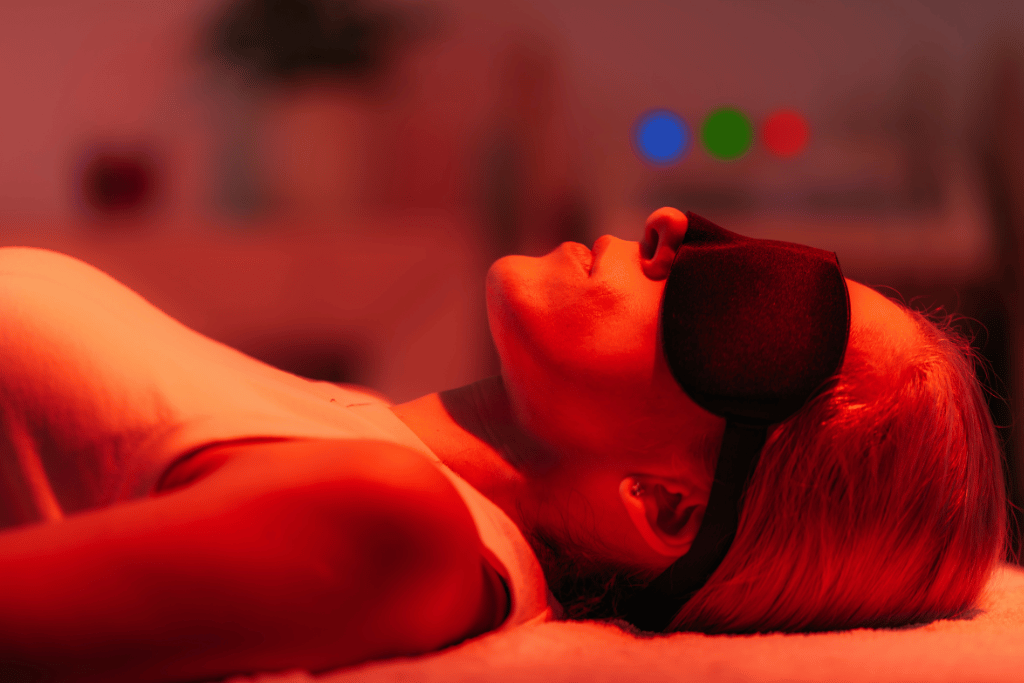
Red light therapy has moved from specialist clinics into homes, gyms and skincare routines. Masks, panels, lamps and wearable devices are now promoted for concerns ranging from fine lines and hair loss to muscle recovery and joint discomfort. But what does red light therapy actually do, and which of these claims are supported by credible evidence?
Red light therapy exposes the body to low-intensity red or near-infrared light. Unlike ultraviolet radiation, these wavelengths do not tan the skin or intentionally damage tissue. Instead, they are thought to influence biological processes within cells.
Research suggests that red light therapy may support certain skin treatments, encourage hair growth in some people and help manage specific types of pain. However, its effectiveness depends heavily on the condition being treated, the device, wavelength, dose and consistency of use. It is not a cure-all, and many popular claims still require stronger clinical evidence.
What Is Red Light Therapy?
Red light therapy is a non-invasive treatment that uses specific wavelengths of visible red light or near-infrared light. It is also known as:
- Photobiomodulation
- Low-level light therapy
- Low-level laser therapy
- LED light therapy
- Cold laser therapy in certain clinical contexts
Visible red light typically acts closer to the skin’s surface, while near-infrared light can reach somewhat deeper tissues. Devices may use LEDs, low-level lasers or a combination of wavelengths.
Red light therapy should not be confused with tanning beds. Tanning beds expose the skin to ultraviolet radiation, which can damage DNA and increase the risk of skin cancer. Red light therapy devices do not use UV light for their intended photobiomodulation effect.
How Does Red Light Therapy Work?
The exact biological mechanisms are still being studied. The leading explanation is that red and near-infrared light are absorbed by light-sensitive molecules inside cells, particularly within the mitochondria.
Mitochondria help cells produce adenosine triphosphate, or ATP, which is the energy cells use to perform many of their functions. Light exposure may temporarily influence this energy-production process and other cellular signalling pathways.
Depending on the tissue and treatment parameters, this response may affect:
- Cellular energy production
- Inflammatory signalling
- Blood circulation
- Collagen-related activity
- Tissue repair
- Oxidative stress
The response is not necessarily stronger when more light is used. Photobiomodulation may have a dose-dependent effect, meaning that a dose that is too low may do little, while excessive exposure may reduce the benefit or cause unwanted effects.
This is one reason why the wavelength, intensity, exposure time and distance from the device matter. Two products that both advertise “red light therapy” may deliver very different doses.
What Does Red Light Therapy Do for the Skin?
Skin rejuvenation is one of the most popular uses of red light therapy. Research indicates that appropriately delivered red light may influence fibroblasts, the cells involved in producing collagen and supporting the skin’s structure.
Over time, this may contribute to modest improvements in:
- Fine lines and wrinkles
- Skin texture
- Elasticity
- Redness
- Signs of photoageing
- Healing after certain dermatological procedures
The American Academy of Dermatology notes that red light therapy may improve some visible signs of skin ageing. However, results differ between devices, and long-term safety data for frequent at-home use remain limited.
Red light therapy should therefore be considered a supportive skincare option rather than a replacement for sunscreen, clinically proven topical treatments or professional dermatological care.
Suggested internal link: Connect this section to an existing skincare, anti-ageing or healthy skin article using an anchor such as how to build an effective skincare routine.
Can Red Light Therapy Help With Acne?
Red light therapy may support acne treatment by helping calm inflammation and promote healing. However, red light does not target acne-causing bacteria in exactly the same way as blue light.
Some professional and at-home devices combine red and blue wavelengths:
- Blue light is generally used to target acne-related bacteria near the skin’s surface.
- Red light may help reduce inflammation and support the recovery of irritated skin.
The combination may benefit some people with mild or moderate inflammatory acne, but results vary. More severe, painful or scarring acne should be assessed by a dermatologist.
People using prescription retinoids, isotretinoin or other medicines that can increase light sensitivity should consult a qualified professional before adding any light-based device to their routine.
Does Red Light Therapy Help Hair Growth?
Low-level red light therapy has shown promising results for some people with androgenetic alopecia, commonly known as pattern hair loss.
The light may influence hair follicles and help extend the active growth phase of the hair cycle. Some caps, helmets and comb-like devices have been cleared for treating certain forms of hereditary hair loss.
Potential results include:
- Reduced shedding
- Improved hair density
- Thicker-looking hair
- Support for existing hair follicles
Results are usually gradual and require consistent use. Red light therapy is also unlikely to restore hair in areas where follicles are no longer functioning.
Hair loss has many possible causes, including hormonal changes, nutrient deficiencies, stress, autoimmune conditions and medication. A proper diagnosis is important before investing in a device.
Suggested internal link: Add a link to a relevant hair health or self-care article with the anchor common causes of hair loss.
Can Red Light Therapy Reduce Pain and Inflammation?
Photobiomodulation has been researched for musculoskeletal pain, joint conditions, exercise recovery and rehabilitation. In some situations, it may temporarily reduce pain or support function by influencing inflammatory processes and local circulation.
Potential applications being studied include:
- Knee osteoarthritis
- Neck or lower-back discomfort
- Tendon-related pain
- Muscle soreness after exercise
- Recovery following certain injuries or procedures
- Oral pain and inflammation
The evidence is not equally strong for every condition. Treatment protocols also vary considerably between studies, making it difficult to recommend one universal wavelength, dose or schedule.
Red light therapy should not delay medical evaluation for persistent pain, sudden swelling, weakness, numbness or an acute injury. It is better viewed as a possible complement to an appropriate treatment plan.
Does Red Light Therapy Improve Muscle Recovery?
Athletes and fitness enthusiasts sometimes use full-body panels or targeted devices after training. Red and near-infrared light may help modify inflammatory responses and oxidative stress associated with exercise.
Some studies report potential benefits for:
- Post-exercise muscle soreness
- Short-term recovery
- Muscle performance
- Fatigue
- Recovery between training sessions
However, the outcome may depend on whether the light is used before or after exercise, the muscles treated and the dose delivered. Red light therapy cannot replace sleep, sufficient protein, hydration, rest days or a suitable training programme.
Suggested internal link: Link this paragraph to an existing fitness or recovery article using evidence-based muscle recovery strategies.
What Is Red Light Therapy Not Proven to Do?
Red light therapy is often marketed for a much broader range of benefits than current human research can reliably support. Claims involving major weight loss, hormone “balancing”, detoxification, fertility, thyroid treatment, immune enhancement or the cure of chronic disease should be approached carefully.
Early laboratory findings or small pilot studies do not automatically prove that a treatment works in everyday clinical use.
According to Stanford Medicine’s overview of the science, evidence is more persuasive for selected uses, including certain skin and hair applications, than for many wider wellness claims promoted online.
A useful question is not simply “Does red light therapy work?” but:
- What condition is being treated?
- What kind of device was studied?
- What wavelength and dose were used?
- Was the research performed on humans?
- How large and well controlled was the study?
- Were the results clinically meaningful?
How Long Does Red Light Therapy Take to Work?
Red light therapy rarely produces immediate, permanent changes. The expected timeline depends on the purpose of treatment.
For skin appearance or hair growth, visible changes may take several weeks or months of consistent use. Pain or post-exercise soreness may respond sooner in some people, although this is not guaranteed.
Clinical and at-home devices also differ in output. A protocol used in a medical study cannot automatically be recreated by using an unrelated consumer device for the same number of minutes.
Before beginning treatment, check the manufacturer’s instructions for:
- Recommended session length
- Distance from the light source
- Treatment frequency
- Whether eye protection is required
- Contraindications
- Maximum exposure time
Taking photographs under the same lighting conditions may provide a more objective way to monitor gradual skin or hair changes.
How Often Should You Use Red Light Therapy?
There is no universal schedule that is appropriate for every device or goal. Some devices are designed for use several times per week, while others have different treatment intervals.
Follow the protocol created for the specific product instead of copying a routine from an influencer or a different device. A ten-minute session with one panel may deliver a very different dose from a ten-minute session with a mask or handheld tool.
Using the device for longer than recommended does not necessarily improve results and could increase the risk of irritation, discomfort or heat-related injury.
Is Red Light Therapy Safe?
Red light therapy is generally considered non-invasive and appears to be well tolerated when a suitable device is used correctly. It does not expose the skin to the ultraviolet radiation associated with tanning beds.
Possible side effects can include:
- Temporary redness
- Skin irritation
- Headache
- Eye discomfort
- Sensitivity
- Burns or blisters if a device overheats or is misused
The Cleveland Clinic’s red light therapy guidance also emphasises that research into all potential uses is still developing. Consumers should be cautious about products making broad or guaranteed medical claims.
Can Red Light Therapy Damage Your Eyes?
Bright LEDs and near-infrared light can pose concerns for the eyes, particularly when devices are used close to the face. Whether protective goggles are necessary depends on the design, wavelength and manufacturer’s safety testing.
Do not stare directly into an illuminated device. Use the supplied eye protection when the manufacturer requires it, and make sure goggles do not interfere with the device’s intended placement.
People with retinal disease, previous eye surgery or other eye conditions should consult an ophthalmologist before using a face mask, helmet or panel near the eyes.
Who Should Avoid Red Light Therapy?
Ask a doctor or dermatologist for personalised advice before using red light therapy if you:
- Have a photosensitivity disorder
- Take medication that increases sensitivity to light
- Have an active skin condition or unexplained lesion
- Have a history of skin cancer
- Have an eye condition
- Are pregnant
- Are receiving treatment for cancer or another serious illness
- Want to use the device over a recent injury or surgical site
A light-based device should not be used to self-treat an unexplained medical symptom.
How to Choose an At-Home Red Light Therapy Device
Marketing terms such as “medical grade” are not always enough to determine whether a device is effective. Look for clear technical and safety information rather than relying only on reviews or celebrity endorsements.
Important factors include:
Intended use
Choose a device designed and legally marketed for your specific goal. A facial skincare mask is not automatically suitable for treating joint discomfort or hair loss.
Wavelengths
The product should disclose the wavelengths it delivers. Many consumer devices use wavelengths within the red or near-infrared range, but the presence of a popular wavelength alone does not prove that the dose is effective.
Irradiance and treatment dose
Irradiance describes the amount of light power reaching a given area. Treatment dose also depends on exposure time and distance. If a brand provides no meaningful information about output or testing, comparing its device with clinical research becomes difficult.
Safety information
Look for detailed instructions, contraindications, eye-safety guidance, a timer and protection against overheating.
Regulatory wording
In the United States, “FDA-cleared” and “FDA-approved” do not mean the same thing. Many lower-risk medical devices reach the market through a clearance process. Clearance for one intended use does not validate every additional benefit advertised by a seller.
Return policy and warranty
Results are not guaranteed, so a transparent return policy and reliable warranty are particularly important for expensive devices.
Red Light Therapy at Home vs Professional Treatment
Professional treatment may offer more precise device settings, stronger output and supervision from a qualified practitioner. It may also be better suited to people receiving treatment for a diagnosed skin or pain condition.
At-home devices are more convenient and may make consistent use easier. However, they can differ substantially in power, coverage, design and quality.
The best choice depends on the intended use, available evidence, cost and whether medical supervision is appropriate.
What Does the Latest Research Say?
Recent medical discussions have become more cautious and condition-specific. Instead of treating red light therapy as one universal intervention, researchers increasingly focus on exact wavelengths, treatment doses, delivery methods and clinical applications.
A 2025 dermatology consensus published in the Journal of the American Academy of Dermatology concluded that photobiomodulation has credible clinical uses in dermatology, while also highlighting the need for standardised protocols. Recent clinical overviews from UCLA Health and Stanford Medicine similarly describe red light therapy as promising for selected applications rather than as a proven treatment for every wellness claim.
The main research limitations remain:
- Small study populations
- Different devices and treatment protocols
- Short follow-up periods
- Inconsistent outcome measurements
- Limited evidence for many popular wellness uses
- Difficulty comparing professional equipment with consumer products
Red light therapy is scientifically plausible and clinically useful in certain contexts, but “promising” should not be interpreted as “proven for everything”.
Is Red Light Therapy Worth It?
Red light therapy may be worth considering when the intended use is supported by reasonable evidence, the device provides transparent specifications and the treatment fits comfortably into your routine and budget.
It is less likely to be a worthwhile investment when a product:
- Promises rapid or guaranteed results
- Claims to treat numerous unrelated conditions
- Does not disclose wavelengths or output
- Uses testimonials as its main evidence
- Encourages replacing medical care
- Has unclear safety instructions
Set realistic expectations. For many cosmetic and wellness applications, any improvement is likely to be gradual and modest rather than dramatic.
Frequently Asked Questions
What does red light therapy actually do?
Red light therapy exposes tissue to low-intensity red or near-infrared light. This may affect mitochondrial activity, cellular signalling, inflammation and tissue-repair processes. The practical effect depends on the condition, device and delivered dose.
Does red light therapy really work?
Evidence supports or suggests benefits for selected applications, including some signs of skin ageing and certain forms of pattern hair loss. Results for pain and recovery vary, while many broader wellness claims remain insufficiently proven.
Does red light therapy burn fat?
Current evidence does not establish red light therapy as a reliable standalone method for significant or lasting fat loss. It should not replace nutrition, physical activity or medical weight-management support.
Can you use red light therapy every day?
Some devices are designed for frequent use, but daily treatment is not appropriate for every product. Follow the instructions for the specific device and avoid exceeding its recommended dose.
Does red light therapy give you vitamin D?
No. The body produces vitamin D primarily in response to ultraviolet B radiation. Red light therapy does not provide the UVB exposure needed for vitamin D synthesis.
Is red light therapy the same as infrared therapy?
Not exactly. Visible red light and near-infrared light occupy different wavelength ranges and penetrate tissue to different depths. Many devices combine them, but far-infrared heat treatments and infrared saunas work differently.
Can red light therapy cause cancer?
Red light therapy does not use the UV radiation associated with tanning-related skin cancer. However, people with cancer, suspicious skin lesions or a history of skin cancer should seek medical advice before treating the affected area.
Should you wear eye protection during red light therapy?
Follow the manufacturer’s eye-safety instructions. Do not stare directly into powerful LEDs, and consult an eye specialist before using a device close to the eyes if you have an existing eye condition.
Medical disclaimer: This article is for general informational purposes and does not provide medical diagnosis or treatment. Consult a qualified healthcare professional before using red light therapy for a medical condition.
